Catching Dengue Fever

Catching Dengue Fever By M. Alberto Rivera
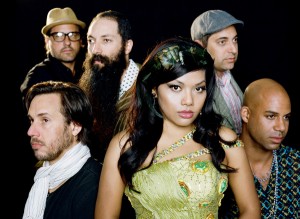 Dengue Fever plays the kind of music you could once only hear snippets of in Viet Nam war flicks. Background music while the main characters rode in taxi’s or drank themselves senseless in seedy dive bars; you’d catch a bit of melody sung in a foreign language, and some reverbed out guitar.
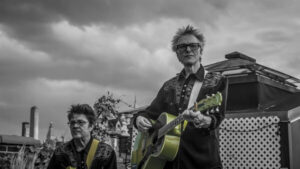
That 2 brothers from California formed a band to perform practically forgotten and unknown music in a foreign language is as unlikely as them actually being popular. But Dengue Fever are an improbable hit. This Los Angeles 6 piece has their own distinctly unique sound, and cannot be easily compared to anyone else. They regularly play festivals sharing the stage with Radiohead and The Flaming Lips. Peter Gabriel is a fan and he signed them to his Real World Records label.
The band was formed in 2001 by brothers Ethan and Zach Holtzman, after Ethan returned from a backpacking trip to Cambodia. He returned with several cassettes of 60’s and 70’s Cambodian pop music by Sinn Sissamouth, the “King of Khmer music,” featuring the vocals of Ros Sereysothea’s.
Now determined to perform their own brand of Cambodian rock, the brothers Holtzman began going to nightclubs in Long Beach, California, where there’s a large Cambodian population, to look for a singer. They found, Chhom Nimol performing at The Dragon House nightclub. As soon as they heard her sing, the brothers knew this is who they wanted. They approached her after the set and she was intrigued. Her friends warned her not to trust the Holzmans, that this was all a ruse. The brothers gave her a CD with three songs on it by Ros Sereysothea, and they’ve been collaborating ever since. Initially Nimol wasn’t allowed to perform with the band on Friday and Saturday nights because of her obligations singing at The Dragon House.
The music is simultaneously exotic and familiar. It’s also as bona fide a world beat band as ever existed, they meld British and American garage and psychedelic rock with strong hints of Ethiopian jazz, and Cambodian pop. The guitars heavily reference 1960’sCalifornia surf bands, heavy on reverb and pretty melodies. The result is a driving and hypnotic music.
Cambodian rock and most of its practioners disappeared during the 1970’s in the violence that engulfed the nation during the Pol Pot regime. As a result, Dengue Fever are practically the only ones still playing this unique brand of music. The band has successfully played Cambodia, but with its own set of challenges.
In 2005, when Dengue Fever made their first trip to perform in Cambodia, they were followed by film maker John Pirozzi, who documented the tour. A huge challenge for them was that this music wasn’t readily recognizable to most of the population. There was a purging of art, artists and anyone who was not in lockstep with the government of the Khmer Rouge. As a result, all that’s left of the era of Cambodian rock are some recordings; until now.
With three full length albums under their belt, “Venus on Earth,” “Escape From the Dragon House,” and “Sleepwalking through the Mekong,” The band shows no sign of slowing down.
Their first album was mostly covers, on which the band leaned heavily on the songs of Sinn Sissamouth. The second and third album had the band writing all the material. With songs performed in English and Khmer (the Cambodian language) Zac Holtzman relied on a translator to interpret his lyrics.
If you are intrigued, AND you should be, you can start at the bands Myspace page and check out a few tracks.
“I Feel Love” is a straight up dance number with an incessant and niggling bass line. It swells with keyboard parts rising and falling back. With vocals that wouldn’t be out of place on the hippest 70’s dance soundtrack.
“Tiger Phone Card” sounds like some of the hippest psychedelia that Quicksilver Messenger Service or Electric Flag ever produced. A duet between Zac and Chhom, sung in English, about the trials of a long distance relationship sustained by emails and phone cards. Late nights, liquor and loneliness are all on the table for this couple trying to make heads or tails of their relationship.
“Sleepwalking Through the Mekong” is a trancelike number which deliberately takes it’s time to tell its story. Sung in Khmer, the vocals are haunting, and the instruments conjure steamy jungles at twilight; timeless and open-ended.
The band has new release scheduled for April 12, 2011 on Fantasy Records. It’s tentatively titled Cannibal Courtship with eleven new original songs written by Dengue Fever.
When asked what his expectations were for the new release, guitarist and songwriter Zac Holtzman replied, “I hope people are as excited about the new songs and directions we’ve gone off in as we are. We’ve put our souls into this album, if you play it backwards you can hear us screaming with pleasure. Nimol’s English has improved immensely, so half the album is made up of songs in English and the other in her native tongue Khmer. We’ve been touring around the world spreading the fever, and I dream that some day we can tour in a blimp. If you know any pilots see if they’re game to go.”
The band has been surprised by their success and the enthusiastic reception they’ve received from western audiences. Dengue Fever continues to be inspired by the 60’s and 70’s music which initially motivated them. Now they feel the freedom of writing their own material and going in which ever direction it may take them. If they continue on this path, being true to themselves, they will undoubtedly produce more spectacular music for a long time to come.
When asked why he thinks audiences have have responded so positively to Dengue Fever’s music, Zac Holtzman answered, “I think we bring the exoticness of Nimol’s Cambodian heritage and the familiarness of garage rock/surf/psychedelic (and what ever other styles each song is pulling us in), and combine them in our own way that transcends any language barriers.
this article previously appeared in www.thrustmagazine.org