Lee Alexander Writes Again

Lee Alexander Writes Again By M. Alberto Rivera
 You know why you should listen to Lee Alexander now? So you can say you heard him before he was on the radio. Before flavor of the month pop singers start recording his songs to make themselves sound as if they have more depth and destroy his songs with excessive production.
And as you listen, you’ll wonder where these songs and their songwriter have been hiding. Alexander’s songs are deftly constructed portraits of beauty, loss, and yearning. As poignant and relevant as the best southern authors, his America is filled with star crossed lovers, men who sing for their supper, endure go nowhere lives in nowhere towns, hoping one day everything will change for the better.
A late bloomer musically, Lee Alexander didn’t begin writing songs until he was in his 20’s. And he is now making up for this late start with smart, introspective, moody and wry songs which will stay in your head long after you’ve heard them. There is nothing obvious or expected about this artist or his songs. He’s won the Bugle Boy Songwriter Showcase,  The Independent Music Award and has been a finalist in the Mountain Stage Newsong Folk Festival, and a finalist in the 2009 John Lennon Songwriting Contest.
Musically and vocally Alexander sounds differently on each track. His chameleon like approach to recording affords a glimpse into his varied influences. Mayhaw Wine’ has the gentle, laconic swing of a Django Rheinhardt number. Lyrically pining for home and all the comforts a return there promises; the smell of magnolias and his lovers embrace. Alexander could have easily turned this song into schmaltzy Hallmark card sentiment, but rather the listener glimpses all he is missing with candor and breathy anticipation. This song was chosen as one of the finalist for the John Lennon Songwriting Contest.
‘Okemah Moon’ stomps and swings like the retro barn burner it is. Just hearing the fiddle in this brings to mind rough hewn planks in a crowded honky tonk dance floor. It’s upbeat and swings with authenticity. A true to form 1940’s style Western Swing song that wouldn’t be out of place in Bob Wills or Hank Williams song book.
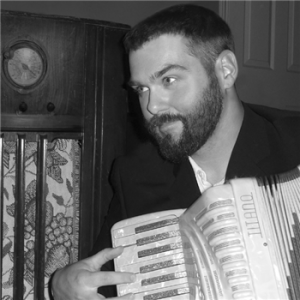
All the attention for his song writing hasn’t translated into wild financial success, and as a result he continues to work a day job, as a schoolteacher in theHoustonarea. I had the opportunity to speak with Lee Alexander recently and get his thoughts on performing, songwriting and why American artists are still discovering and paying tribute to Woody Guthrie.
When did you first start writing songs?
The first time I started writing songs I was in my early 20’s. But I didn’t start writing good songs until a little bit later.
How long did it take before you started writing songs that you really enjoyed?
 It took close to maybe the span of a decade. A lot of it was doing covers, The Beatles, or Jim Croce, whatever was conducive o a one man acoustic show.
It took a good couple of years before I felt I had some work that I was confident about recording and reproducing for people to listen to.
Was it awkward at first playing your own songs for people?
I had a nice little buffer there. Before I started doing stuff solo, I was writing songs for other bands, where I was songwriting, but I wasn’t the frontman. It was a good way to see what worked and to get feedback on which songs were good and my face wasn’t attached to.
Were the other band members receptive at first or was there some hesitancy?
They were receptive. I was playing in two bands at the same time. Then my wife and I, we found out we were expecting, and I gave up music for a couple of years. You know, there’s this little life that’s dependant on you. Then a year and half later we had another one.
There’s nothing like kids to snap you back to responsibility.
There’s no time for coming in at 3 am from Austin, then picking up, feeding a baby and trying to go to work. It’s no good. It’s a balancing act that I do to this day. Between working and family. And that means I don’t always get to record when I want to. You do what you can do when you can do it.
You’re still teaching full time. How do the people around you at work respond to that?
They think it’s pretty neat. A lot of the teachers around me are older and make suggestions like I ‘Ought to audition for American Idol’. Which I would never do. I know it’s well intentioned.
You were a finalist in the John Lennon Song writing competition, which song was submitted for consideration?
I submitted half the album and the song which was selected was the one jazz song on the album, ‘Mayhaw Wine.’
And as a Beatles fan what went through your mind after making it that far?
It was really, really cool. As a Beatles fan I feel really small. In a very small way you’re connected to that world of the Beatles.
At the same time it’s also incredibly flattering. You think about however many thousands of people have entered that contest each year. And the judges who were overseeing that panel, like Natasha Bedingfield, Bob Weir from the Grateful Dead, anytime someone on that level approves of your song, that’s a big deal. In 2007 I won The Independent Music Award, same sort of contest, it was an all star panel, my band and I won for “Best Political Song,” ‘Ain’t No Crime.’
On your song, “Soul of America (Ode to Guthrie)” You ask, “Were you the conscience of a nation, and the Soul of America?” Do you recall when Woody Guthrie first resonated with you and what that was like?
I remember, probably like most people, growing up in any decade beyond the 60’s, Bob Dylan was an introduction to that. I don’t think that I was fully aware of who he was, aside from being an influence of Dylan’s. I picked up his autobiography, ‘Bound For Glory’ (Guthrie) and it’s almost impossible to read, because he wrote it in the hobo-boxcar slang. I picked that up first. I was interested in him, his principals and his history prior to even really listening to his music. And eventually I bought “Dustbowl Ballads.’
The thing about woody Guthrie, about the way he grew up, and where he was from he had these revolutionary ideas, but he was really plainspoken. It was about equality. He was very direct, and often he’d make jokes about it. He’d be very tongue in cheek. There hasn’t been anyone like him since who’s managed to pull that off.
And are you ever amazed at the breadth and width of artists still inspired by Woody Guthrie today?
When we think of artists and their influences, we tend to think of sound. We don’t always think of artists being influenced by a character they admire. Like Bruce Springsteen. He doesn’t sound like anyone he says he was influenced by. Pete Seeger, Bob Dylan and Woody Guthrie, those are the main three he cites. There’s something about their message that resonated with him.
“Okemah Moon” sounds a lot like an old time country song, lyrically and stylistically. How much of that was intentional or did it just happen?
It is a kind of a Bob wills thing, and it was intentional. It started off as an experiment. I was trying to get more into storytelling. Which was something that I’d always admired and was real big, especially in country music, back in the 50’s, even in pop music, in the 40’s and 50’s. It’s kind of a dying art.
I was testing myself, could I actually make up a story? And I couldn’t, but I thought, what if I took Romeo and Juliet and set it in a rural town? Somewhere between East Texas and the Great Plains, this had to take place.
I am a big fan of Bob Wills he was notorious for touring Oklahoma and the Texas panhandle, and really anywhere. And then back to the Woody Guthrie thing, it was his hometown, so let’s go there.
Part of what’s fun about the song is how true to form it is stylistically, not just referencing older music, but playing it true to form.
The thing is that spurred me going with that style, is that I can’t stand modern country music in the least. It started in Nashville in the mid-90’s and I don’t know what’s going on over there. It’s weird, because Houston is in a kind of a bubble. We here that junk on commercial radio like the rest of the country, but if you go to a honky tonk in Houston, you’ll still hear Willie Nelson. They play Bob Wills and the older stuff. Houston has divorced itself from mainstream country.
In terms of modern country music, I wasn’t hearing anything I liked, so I wrote the sort of song I wanted to hear. I try not to be too critical of. I know people like it, but it’s just not my cup of tea. I think country music can do better.
You’ve described ‘Mayhaw Vaudville’ as 9 part vaudeville act, complete with prelude and curtain call. How did this come about?
It was pretty thought out. Some of the songs, ‘These Days’ and ‘Miles Between’, we’d been performing those forever. I did get into this retro mindset. I visited the Balinese Room in Galveston Texas. It was a legendary place. Gambling hall, where Sinatra performed. Anybody who was anybody played there. In fact ZZ Top wrote a song about the place. So I visited there and saw all the faces and autographs on the wall. I started reading some biographies about vaudevillians. Like Bob Hope, Bob Wills, Ma Rainey, all got their training on the Vaudeville stage. It was a breeding ground for popular American music right when recorded music was becoming commercially viable.
The ending song was specifically written for the album to tie it all up.
There was a lot of purpose behind it, There was a lot of wackier retro stuff, the people around me said, ‘That’s too weird. You need to keep this more normal if people are going to buy this.’ There’s some stuff that got pared out of this. It got a little strange.
‘Mayhaw Wine’ is one of those songs that came form my 30’s era mindset I was going through at the time. I had wanted to have my CD release party at the Balinese Room. It was wiped out by Hurricane Ike when it came through. There was nothing left to it. It was a club over the water on a pier.
Do you have a favorite song to perform?
‘Okemeh Moon’ is just really fun to play. It deviates from most of the stuff we do. One of the songs I like the most is ‘Carol Anne’. But the funny thing is that nobody responds to it live.
How do you approach Songwriting? Is it disciplined or do you wait for inspiration to strike?
There’s no discipline at all. I‘ve learned from experience it’s not something I can force. I mean I can write a pop song, follow the formula. But not the sort of song I want to attach my name to. Six months can go by and I write nothing. Then inspiration will strike and I will write song after song.
I have a notebook full of half written songs. A chorus or a verse of something. Then sometimes I’ll be able to dovetail two songs together. ‘Union Street’ I started over 10 years ago. I’d start it and then put it down. Get frustrated, Pick it up again.
I ‘m more focused on the lyrics than the music. The songs that stick with you, usually it’s because of the lyrics.
It’s no easy thing to write something that’s memorable.
It’s hard to be substantial. It’s your connection with people. That comes with good writing and reading. I think that’s the problem with a lot of lyrics. I get the feeling that these people don’t read. I’m going to pull a few names out of a hat, John Lennon and Bob Dylan, for example. They were notorious readers. They read all the time and they read good works. It was no accident that they were great songwriters.
It is hard to find the right words to describe what you’re feeling or going through. It is a lot easier the more you’re exposed to others ideas and their phrasing when you see that language in use.
If you are a reader, and you think of those books you love, and why do you love them? It’s because the way the writer put those ideas into writing. It’s the same with songwriting, if you don’t have substance then you don’t have anything.
A different version of this article previously appeared in www.thrustmagazine.org